In the high-throughput ecosystem of modern maritime ports, inland dry depots, and global logistics hubs, the efficiency of empty container logistics dictates supply chain viability. Empty Container Handlers (ECH) act as the vital arteries of these operations, handling the rapid stacking, sorting, and positioning of ISO containers.
As empty containers account for roughly 20-25% of global port traffic, selecting the appropriate manufacturing partner is not simply a matter of equipment procurement—it is a critical decision that influences operational downtime, terminal operating costs (TCO), and workplace safety compliance. China has emerged as the global epicenter for producing high-durability, cost-efficient, and technologically advanced container handling equipment. This document serves as an industry whitepaper examining the core facets of selecting a leading Chinese factory, emphasizing structural stability, localized field services, and the global trends shaping modern cargo terminals.
Anhui Neto Forklifts Co., Ltd. is a prominent, modern enterprise specializing in the intensive research, development, engineering design, manufacturing, and global sales of material handling equipment, container logistics machinery, and heavy duty construction equipment. With over 30 years of industry experience, the factory is dedicated to delivering highly dependable, CE/SGS compliant machinery tailored to withstand the demanding cycles of heavy industrial ports and distribution hubs.
The company’s advanced production facilities have received international accreditation under ISO quality management systems and SGS. All machinery configurations comply with CE standards to guarantee long-term operational durability, safety under high-moment loads, and universal regulatory alignment. Leveraging a powerful in-house R&D team of more than 35 professional engineers and technicians, the factory continues to innovate, holding over 30 independent patents—ranging from structural designs and utility models to advanced electronic stabilization controllers.
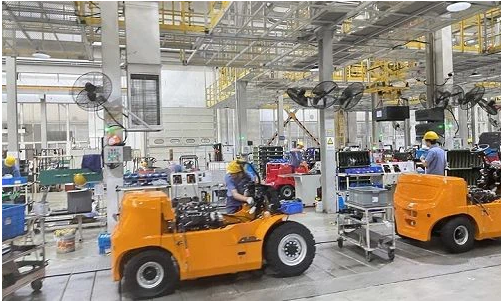
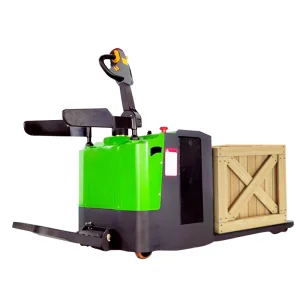
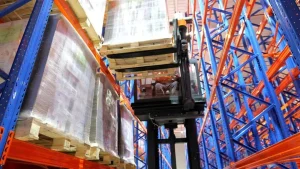
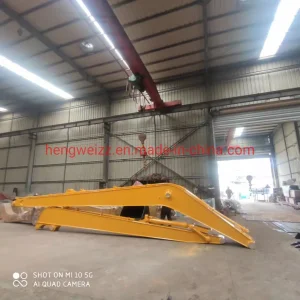
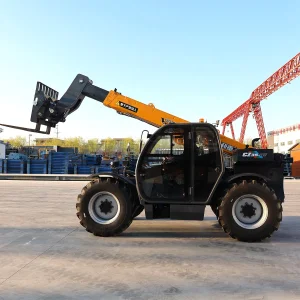
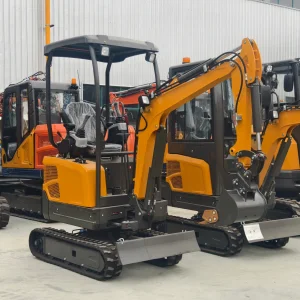
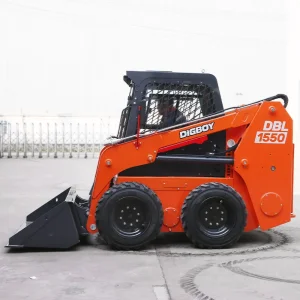
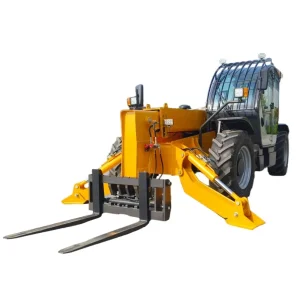
Neto Forklifts designs and constructs a wide matrix of equipment to cover all nodes of warehouse, terminal, and industrial movement:
Quality and structural reliability are directly determined by manufacturing precision. At our factories, we systematically eliminate structural variations through advanced automation and strict metrological testing regimes. The implementation of high-end machinery ensures that every Empty Container Handler mast, frame, and chassis can endure millions of loading cycles:
Automated robotic welding systems from OTC Japan execute high-penetration structural welds on critical chassis points, ensuring consistent weld-depth and eliminating structural micro-defects.
High-precision laser cutting technology allows for complex structural plates to be cut within tolerances of ±0.1mm, optimizing load-bearing geometry and joint cohesion.
ZEISS Coordinate Measuring Machines (CMM) conduct extensive physical verifications on machined parts, confirming absolute concentricity and dimensional compliance.
Beyond structural machining, our specialized test platforms physically simulate the rigorous environments of busy ports. Every lift cylinder is subjected to pressure surge testing, and every chassis undergoes multi-axial stress verification to guarantee compliance with international safety quotients.
Decades of industrial concentration have transformed China into the world’s most comprehensive manufacturing ecosystem for heavy-duty material handling machinery. For international buyers, sourcing empty container handlers from a Tier-1 Chinese factory provides structural, financial, and logistical advantages:
| Feature Parameter | Chinese Tier-1 Manufacturers | Western OEM Brands | Impact on Terminal Operations |
|---|---|---|---|
| Initial Capital Outlay (CapEx) | Optimized production costs; 25% - 40% more cost-effective. | High premium due to historical brand positioning. | Allows port operators to expand fleets faster within the same capital budget. |
| Component Integration | Flexible configuration: Cummins Engines, Dana Transmissions, Kessler Axles. | Rigid proprietary components; limited buyer choice. | Simplifies regional parts matching and minimizes technician training requirements. |
| Lead Times & Delivery | 8 to 12 weeks through highly synchronized supply networks. | Can exceed 6 to 9 months due to regional supply constraints. | Allows terminal operators to rapidly adapt to sudden shifts in trade volumes. |
| Customization Agility | Fast structural customization for specific mast heights & spreader shapes. | Standard models only; high fees for custom engineering. | Delivers exact-fit machinery for unique yard restrictions and regional operations. |
By locating our production assets close to major steel complexes and deepwater shipping terminals, we minimize internal logistical delays. We pass these savings directly to our partners while offering the flexibility to choose specific drive axles, hydraulic valves, and cabin control layouts to match pre-existing fleets.
Empty container handlers operate in dynamic, high-risk environments. Depending on the size of the port and the specific layout of the terminal, the machine must meet distinct operational criteria:
ICDs require versatile handlers capable of working in narrow spaces. Operators value tight turning radii, dynamic load charts, and quick-response side-shift spreaders for rapid truck loading.
High wind loads and salt-spray corrosion require marine-grade protective coatings, heavy-duty chassis structures, and high mast configurations for stacking 7 to 8 containers high.
Leasing operators demand low maintenance overhead, clear onboard diagnostics (CAN-bus systems), and high resale values. Reliability and easily sourced wear parts are crucial.
Modern terminal operations rely on maximizing container throughput. To meet this demand, our handlers feature responsive hydraulic systems that enable fast lift and lower speeds. Additionally, cabin designs prioritize ergonomic layouts with intuitive joystick controllers to minimize operator fatigue and improve overall handling precision.
Procuring heavy machinery from an international supplier requires robust, long-term support. A high-performance handler is only as good as the service infrastructure backing it up. Anhui Neto Forklifts has established a comprehensive service program to protect your investment:
To ensure global compliance, our empty container handlers meet stringent regulatory standards, including European CE machinery directives, US EPA engine Tier standards, and Australian safety requirements. Each unit is delivered with a comprehensive technical documentation package, including assembly drawings, load charts, hydraulic schematics, and factory test reports.
The port logistics industry is undergoing a structural shift driven by two primary forces: decarbonization and automated data integration. Modern ports must implement cleaner equipment while driving down operational costs through technology:
Zero-emission regulations are pushing terminals toward electric empty container handlers. High-voltage lithium battery packs provide 8 hours of continuous operation, with rapid charging capabilities during operator breaks.
Onboard telematics systems transmit real-time data regarding fuel usage, hydraulic temperatures, load weights, and operator efficiency, helping fleet managers schedule predictive maintenance.
By integrating lidar, radar sensors, and high-definition cameras, modern container handlers feature 360-degree hazard monitoring and automatic speed reduction to prevent collisions with ground personnel or stacks.
Anhui Neto Forklifts is investing in these emerging technologies by refining our lithium-ion chassis designs, developing advanced telemetry systems, and integrating intelligent safety packages. Our goal is to ensure our customers remain competitive as ports shift toward smarter, greener operations.
Anhui Neto Forklifts Co., Ltd. remains committed to the foundational principle of "Quality First, Customer Foremost." We continue to develop efficient, environmentally responsible, and intelligent material handling machinery. Through rigorous quality control, modern manufacturing, and responsive after-sales service, we strive to build reliable, long-term partnerships with customers worldwide, ensuring smooth and safe operations across all global trade lanes.
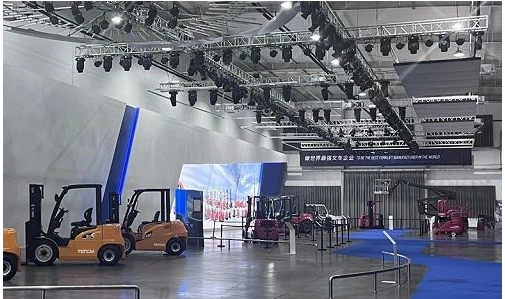
Standard empty container handlers typically offer a lift capacity ranging from 8 to 10 metric tons at a load center of 1,220 mm. Depending on the mast configuration (telescopic duplex or triplex masts), they can stack ISO containers from 5-high up to 8-high, maximizing vertical space in container depots.
We use high-tensile steel (e.g., Q345B/Q460C) in mast and chassis construction, welded by automated OTC robots. Dynamic stability is managed by real-time safety load controllers that monitor boom angles and load weight, automatically restricting dangerous movements if safety thresholds are exceeded.
Yes, our handlers feature standard ISO interfaces that support a variety of spreaders, including single-container twistlock spreaders and double-container hook systems. We can also customize spreaders to handle non-standard containers or wide cargo profiles.
For regions with strict environmental regulations like the EU and USA, we equip our handlers with Stage V or Tier 4 Final compliant engines (such as Cummins or Volvo Penta). For other regions, we offer Tier 2 or Tier 3 engines to match local fuel conditions and simplify maintenance.
We offer a comprehensive support package: a 12-month warranty, rapid parts delivery via express courier, online technical support, and the option to dispatch field service engineers for on-site commissioning, maintenance, or training.
 Neto Forklifts