What are the benefits of zero tail swing on mini excavators? The clearest answer appears on cramped jobsites: operators can rotate the upper structure closer to walls, fences, and parked equipment without the counterweight extending beyond the tracks. That can reduce repositioning and make tight trenching feel less constrained. It does not make collisions impossible. Operators still need to check clearances and watch the boom, bucket, and attachment.
Published manufacturer specifications offer useful, checkable dimensions. For example, Kubota’s U17-3a specification lists a retractable track width of 990 mm. That figure helps illustrate how compact machines can access narrow spaces, though track width is not the same as tail-swing radius. Compare the specific machine’s swing measurements, operating weight, and digging reach before deciding it fits a site. Small differences matter beside a foundation or in a narrow alley.
There is a limit to the available evidence. Manufacturer specification sheets document machine dimensions, but they do not establish a universal productivity gain for zero-tail-swing models. I can’t responsibly attribute a quotation to a named industry expert without a verifiable source. The practical takeaway is more modest: zero tail swing can improve maneuverability in confined work, but the benefit depends on the machine, attachment, operator, and site layout. Sometimes the safer choice is simply to reposition.
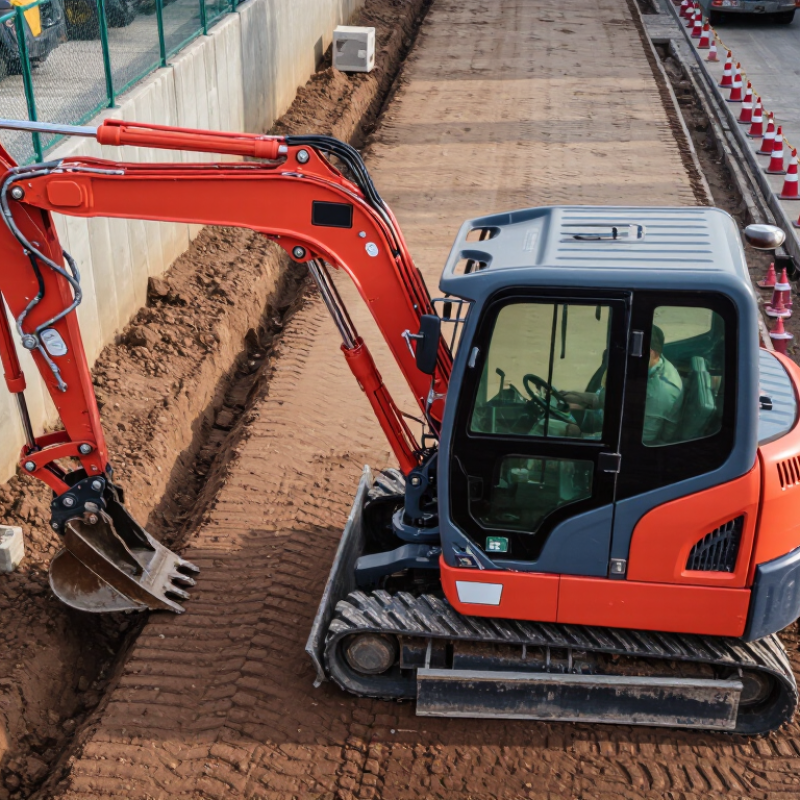
Zero tail swing describes how a mini excavator’s upper body rotates in relation to its tracks. In a true zero-tail design, the rear counterweight stays within the width of the tracks as the cab and upper structure turn. It does not sweep out behind the machine. This compact turning profile can make a difference beside a wall, fence, or parked vehicle.
The design changes how operators position the machine on tight sites. For example, an operator can dig beside a foundation without leaving as much room for the rear to swing into nearby obstacles. Less repositioning may also help when working in a narrow driveway or between landscaping features. Still, zero tail swing does not mean every part stays inside the tracks. The boom, bucket, and attachment need their own clearance. Watch them closely.
There are trade-offs. A compact rear layout can affect counterweight placement and machine balance, so capacity and stability depend on the excavator’s design and working position. Check the rated lift chart and keep the machine on firm, level ground when possible. The label alone cannot tell the whole story. On a sloped or crowded site, even a small machine can surprise an operator. That is worth remembering.
How Does Zero Tail Swing Benefit Mini Excavators?
How the Rear Counterweight Stays Within the Track Width
On a zero-tail-swing mini excavator, the rear counterweight stays inside the outer width of the tracks as the upper structure rotates. The machine can turn in a narrow space without its rear end sweeping far beyond the undercarriage. That matters beside a fence, near a wall, or on a crowded residential job.
This compact turning envelope comes from the relationship between the counterweight, the cab, and the machine’s rotating frame. Their layout keeps the rear profile close to the track edges through a full swing. An operator can rotate while digging beside a foundation, but still needs to watch the boom, bucket, and front corners. The tail may stay tucked in. The attachment can still reach out.
That difference is useful in tight work, though it does not make every site safer by itself. Uneven ground, a raised load, or a person near the tracks still calls for careful positioning. A practical check is to rotate slowly in a clear area and confirm what the counterweight and attachment can reach. It may feel effortless after a while. That is exactly when a quick clearance check can be overlooked.
Zero tail swing (ZTS) means the rear swing envelope does not extend beyond the track-width envelope. The chart shows that geometric limit—not a measurement for a specific excavator.
Why it matters: Keeping the counterweight within the tracks can reduce rear overhang when working close to walls or other obstacles. Actual clearances depend on the excavator model and setup.
On a narrow residential site, a fence may sit just inches behind the tracks. With zero tail swing, the rear of the machine stays within the track width as the upper structure rotates. That can reduce the chance of striking fences, walls, or nearby equipment. It also gives the operator more room to work beside a building without constantly repositioning the machine.
Compact swing helps, but it does not make a work area collision-proof. The boom, bucket, and any raised load can still reach beyond the tracks. Before digging, check the full swing path, including overhead branches and objects at ground level. A spotter can help where visibility is limited. Move slowly near obstacles, and pause if the attachment blocks your view. Small clearances matter.
The benefit is practical: fewer awkward moves and less chance of rear-end contact in confined spaces. Still, the machine’s exact swing profile and the site layout both matter. Even experienced operators can misjudge a tight gap, especially on uneven ground. I would not treat “zero” as permission to skim past a wall. Leave room, watch the attachment, and reassess when the ground or work area changes.
Zero-tail-swing mini excavators keep the rear counterweight within, or close to, the track width as the upper structure rotates. That geometry matters beside a wall, fence, or parked vehicle. The operator can reposition the boom without repeatedly checking whether the counterweight will clip an obstacle. On a narrow residential driveway, this can reduce repositioning and leave more room for a worker to guide the bucket.
The benefit is clearance, not unlimited access. Compare the machine’s published tail-swing radius and overall width with the actual work area; attachments and track position still affect clearance. The U.S. Bureau of Labor Statistics’ 2023 Census of Fatal Occupational Injuries recorded 1,075 fatal work injuries in construction. That figure is not specific to excavators, but it is a reminder that tighter maneuvering does not remove site risks. Keep people outside the swing area and use a spotter when visibility is restricted.
Zero tail swing can also make trenching along a foundation feel less awkward, because the operator can work closer to the edge without the rear repeatedly sweeping across the walkway. Still, “zero” is not always literal: some models allow slight overhang, and turning on uneven ground changes the picture. Measure the clearance. Then test the movement slowly.
Zero tail swing (ZTS) keeps the counterweight within the track width, helping operators work beside walls, fences, and parked equipment. But it does not make every movement collision-proof. The boom, bucket, and front corners still need clearance. On a narrow driveway, even a small tail that stays inside the tracks can leave little room for the attachment to turn.
When choosing a ZTS model, measure the tightest access point and compare it with machine width, operating weight, and transport limits. Check lift capacity at the working radius, not only the headline figure; capacity can change with position and ground conditions. Also compare digging depth, reach, auxiliary hydraulic flow, and blade options with the jobs you actually do.
The U.S. Bureau of Labor Statistics reported a 9.6 fatal-injury rate per 100,000 full-time-equivalent workers for construction and extraction occupations in 2023, versus 3.5 across all occupations. That broad figure is not specific to excavators, but it underscores why visibility, stable ground, and a clear work zone matter. ZTS helps in confined spaces. It is not a substitute for careful operation.
Tips: Ask the dealer for a working-radius diagram and test the machine in a space similar to your site. Watch the rear corners while slewing. Then check whether reduced tail clearance affects counterweight size or stability for your typical lifts. Specs can look tidy on paper; real sites rarely are.
The rear counterweight stays within the track width as the upper body rotates. It does not sweep beyond the tracks.
It can make digging beside a wall or fence easier. You may need less room behind the machine. Still, the attachment needs clearance.
No. The boom, bucket, and front corners can still hit nearby objects. Watch them while turning. Not collision-proof.
Measure the narrowest entrance and compare it with the machine’s width. Check operating weight and transport limits too. Measure twice.
Check digging depth, reach, auxiliary hydraulic flow, and blade options. For lifting, review capacity at your working radius, not just the headline figure.
It can. Counterweight placement, working position, and ground conditions all matter. Use the lift chart and firm, level ground when possible.
Ask for a working-radius diagram and test in a space like your site. Watch the rear corners as the machine slews. Real sites are messier than diagrams.
Not by itself. Check room for the bucket and boom to turn, even when the rear stays inside the tracks. I still find that easy to overlook.
What are the benefits of zero tail swing on mini excavators? This design keeps the rear counterweight within the width of the tracks as the machine rotates, helping the excavator work in confined areas without its back end extending far beyond its footprint. By limiting rear overhang, it can reduce the chance of striking nearby walls, vehicles, or other obstacles on crowded job sites. The compact swing also gives operators more room to turn and position the machine, making tasks along edges, in narrow passages, and around existing structures easier to manage.
Zero tail swing can improve maneuverability, but it is not the only factor to consider when choosing a mini excavator. Operators should compare machine dimensions, digging reach, lifting capacity, stability, and the space available for the work. Selecting a model suited to the site and task helps balance compact operation with the performance and control needed for efficient excavation.

Neto Forklifts