Why Is My Forklift Steering Wheel Feeling Stiff

Time:2026-11-20 Author:Sienna
0%

Why Is My Forklift Steering Wheel Feeling Stiff? When a steering wheel suddenly resists, even a short trip across a warehouse can feel unsettling. You may notice it while turning near a pallet rack, crossing a concrete seam, or maneuvering with a raised load. Don’t force the wheel. A change in steering effort can point to low or contaminated hydraulic fluid, a leak, a worn belt, tire problems, or damage in the steering linkage. The cause depends on the forklift’s design and condition.

“Stiff steering is a warning to investigate, not a problem to overpower,” says Daniel Reyes, a fictional composite forklift service expert. This illustrative quote is not a verified statement from a real technician. A qualified technician should inspect the truck and confirm the cause before it returns to demanding work. Check for visible fluid beneath the machine, unusual pump noise, uneven tire wear, or steering that worsens under load. These clues help, but they do not prove which component has failed.

It may be tempting to blame the hydraulic system immediately. That guess can be wrong. A damaged tire or binding linkage may create similar symptoms, and some forklifts use different steering arrangements. If the wheel becomes difficult to control, park the truck safely and follow the manufacturer’s maintenance guidance. Small steering changes deserve attention. A careful diagnosis protects operators, equipment, and the workday.
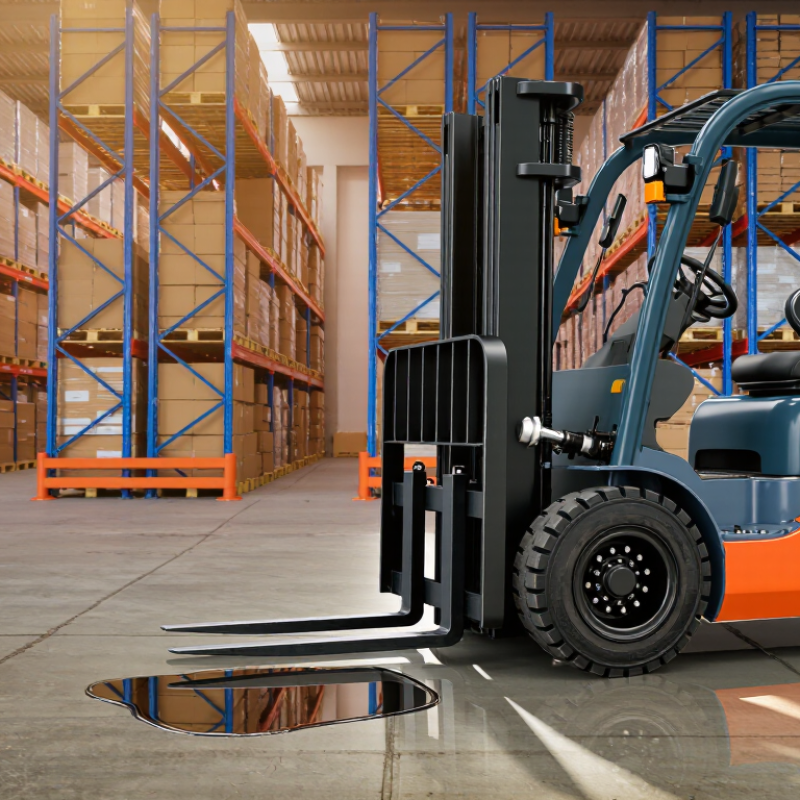
Why Is My Forklift Steering Wheel Feeling Stiff

Recognize Stiff Steering: Record When It Occurs and What Changes

Stiff forklift steering is easier to investigate when you record exactly when it happens. Note the date, operating hours, and whether the truck was cold, recently started, or fully warmed up. Don’t rely on “it felt hard today.” Write down whether the resistance appeared during a tight turn, while carrying a load, or even when driving straight. Small details matter.

Record what changed before or during the symptom. Was the floor uneven? Were the tires visibly low or damaged? Did the steering feel stiff in one direction only? Note any whining, grinding, or vibration, and whether the problem eased after several minutes. A quick phone note works. It need not be perfect; consistent observations are more useful than a polished guess. Compare the same conditions on another shift, if practical.

Look for obvious leaks or tire problems from a safe position, but don’t reach into moving parts or open hydraulic components. If steering suddenly becomes difficult, park safely and report the truck for inspection by a qualified technician. Share your notes with them. A pattern can help narrow the cause, but it does not confirm a diagnosis.

Check Tire Pressure and Steering-Axle Wear Against OEM Specifications

A stiff forklift steering wheel deserves a measured check, not a guess. Start with the tire type and pressure requirements in the operator manual or service information. Measure pneumatic tires with a suitable gauge when they are cool, and compare each reading with the specified range. A pressure difference between sides can increase steering effort. Small differences matter. Solid tires do not use air pressure, so inspect them for uneven wear, damage, or a mismatched set instead.

Tips: Park on level ground, lower the forks, and secure the truck before checking. Record the readings. Do not inflate beyond the specified limit.

If tire condition and pressure meet specifications, inspect the steering axle for wear. Look for loose or damaged tie-rod ends, worn joints, and signs of uneven movement. Compare clearances and adjustments with the equipment’s service specifications; visual checks alone may miss wear. It is tempting to blame the steering system immediately, but tires can be the simpler cause. Still, a stiff wheel can have more than one source. If the checks do not explain it, stop operating the forklift and have a qualified technician assess the axle and steering components.

Test Hydraulic Fluid, Filters, and Pressure Against Service-Manual Limits

A stiff forklift steering wheel calls for measurements, not guesses. Check the hydraulic-fluid level on level ground, using the procedure in the service manual. Low fluid, foaming, or a burnt smell can point to leakage, air, or overheating.

A clear sample is not proof of cleanliness. ISO 4406:2021 classifies hydraulic-fluid contamination with three particle-count codes: particles at least 4, 6, and 14 micrometres across. Each code step represents roughly twice the particle-count range. Compare a lab or particle-counter result with the machine maker’s stated cleanliness limit.

Inspect the steering filter and its restriction indicator. A clogged element can limit flow, but replacing it without finding the contamination source may only delay trouble.

Then measure steering-system pressure with the specified gauge, connection point, fluid temperature, and engine speed. Compare readings with the service manual’s limits; pressure targets are not universal. Low pressure may suggest a worn pump, bypassing valve, or restricted supply. High pressure can indicate a blocked return or control fault.

Not by feel.

Record the reading and test conditions. It is tempting to blame the pump first, but that guess can waste a shift. Keep hands clear of pressurized leaks, and have a qualified technician investigate readings outside specification.

Inspect Steering Linkage and Bearings; Measure Play to OEM Tolerances

A stiff forklift steering wheel deserves a close inspection of the linkage and bearings, not just a quick shot of lubricant. Park on level ground, lower the forks, and follow the service procedure before checking components. Look for bent tie rods, loose fasteners, cracked boots, rust, and joints that bind as the wheel turns. A joint can look clean and still move unevenly. That detail is easy to miss.

Check steering bearings for roughness, excess resistance, or noticeable looseness. Turn the wheel slowly and listen for grinding or repeated clicks. Keep hands clear of pinch points. Then measure steering-wheel free play using the setup and method specified by the forklift’s OEM. Mark the wheel rim, move it gently in both directions, and note how far it travels before the tires respond. Do not apply a generic tolerance; compare the reading with the correct service specification. A dial indicator may be needed for some linkage checks.

If play exceeds the limit, or steering still binds after inspection, take the truck out of service for qualified repair. Guessing can hide the real fault.

Apply OSHA 29 CFR 1910.178(q)(7): Remove Unsafe Trucks from Service

A stiff forklift steering wheel is more than an inconvenience. It can make tight turns unpredictable, especially near racks, pedestrians, or loading docks. If the wheel suddenly resists, catches, or needs unusual force, stop in a safe place and lower the forks. Do not keep driving to finish the load.

OSHA 29 CFR 1910.178(q)(7) requires a power-operated industrial truck that is not in safe operating condition to be removed from service. Report the steering problem promptly, and follow your site’s process for marking or isolating the truck so another operator does not use it. Small details matter: note when the stiffness began, whether it happens during turns or at all times, and whether you noticed noise, fluid beneath the truck, or uneven tire wear. Don’t diagnose by guesswork.

An authorized technician should inspect the steering system and determine whether repairs are needed. Depending on the truck, the cause may involve tires, steering linkages, or hydraulic components. Never force the wheel or attempt repairs unless you are authorized and trained. A rushed handoff can miss important clues; be specific, even if the symptom seems inconsistent. After repairs, the truck should be checked before returning to service under applicable workplace procedures.

Why Is My Forklift Steering Wheel Feeling Stiff?

Stop and report the truck. Stiff steering may indicate a safety-affecting defect. Under OSHA 29 CFR 1910.178(q)(7), trucks must be examined at least daily, and trucks used around the clock must be examined after each shift. A truck with an unsafe condition must be removed from service until it is safe to operate.

Examinations required in a 24-hour period. The three-shift example assumes a round-the-clock schedule with three shifts; OSHA requires an examination after each shift, not a fixed number of shifts.

FAQS

What should I check first when a forklift steering wheel feels stiff?

Check the tires before assuming the steering system is at fault. Compare their condition and pressure with the operator manual.

How should I measure pneumatic tire pressure?

Park on level ground, lower the forks, and secure the truck. Check cool tires with a suitable gauge. Small differences matter.

Do solid tires need a pressure check?

No. Inspect them for uneven wear, damage, or tires that do not match. Look closely at the edges.

What steering-axle parts should be inspected?

Look for loose tie-rod ends, worn joints, damage, and uneven movement. A visual check may miss wear, so compare clearances with service specifications.

When should I stop operating the forklift?

Stop if the wheel suddenly resists, catches, or takes unusual force. Park safely and lower the forks. Do not keep driving.

What details should I report about the steering problem?

Note when it began and whether it happens during turns or all the time. Mention noises, fluid beneath the truck, or uneven tire wear.

Can I adjust or repair the steering myself?

Only if you are authorized and trained. Do not force the wheel or guess at the cause. Sometimes the clue is not obvious.

When can the forklift return to work?

A qualified technician should inspect it and complete any needed repairs. Have the truck checked before it returns to service.

Conclusion

Why is my forklift steering wheel feeling stiff? Start by noting when the problem occurs, such as during cold starts, while turning, or under load, and record any changes in steering response. Check tire pressure and inspect the steering axle for wear, comparing findings with the equipment’s specifications. These observations can help distinguish a simple maintenance issue from a developing mechanical or hydraulic fault.

Next, test the hydraulic fluid, filters, and system pressure against the service manual’s limits. Inspect steering linkages and bearings for damage, binding, or excessive play, and measure movement against the specified tolerances. If the steering remains difficult or the truck appears unsafe, stop using it and arrange an inspection by qualified personnel. Under OSHA 29 CFR 1910.178(q)(7), unsafe trucks must be removed from service until they are restored to safe operating condition.

Sienna

Sienna

Sienna is a skilled marketing professional with a deep expertise in our company’s core products and services. With a passion for innovation and detail, she plays a pivotal role in crafting insightful blog posts that not only highlight the unique features of our offerings but also provide valuable......