Electric forklifts have become essential in various industries, enhancing efficiency and reducing emissions. However, many operators face a common issue: "Why is my electric forklift battery losing charge quickly?" Understanding the factors behind this problem is crucial for optimizing performance and reducing costs.
Industry expert Dr. Laura Sanchez emphasizes the significance of battery maintenance. She states, "Neglecting battery care can lead to rapid depletion of charge and reduced lifespan." Reports from the Forklift Battery Association reveal that inadequate charging practices contribute to more than 30% of battery failures in electric forklifts. Factors such as temperature, charging habits, and battery age play pivotal roles in determining battery health.
Moreover, environmental conditions like extreme temperatures can affect battery performance. A battery operating in a hot warehouse may drain faster than one in a climate-controlled space. Being aware of these variables is key to maintaining optimal battery performance. Identifying the reasons behind quick charge loss can help businesses reduce downtime and save on replacement costs. Understanding the intricacies of battery management empowers operators to make informed decisions.
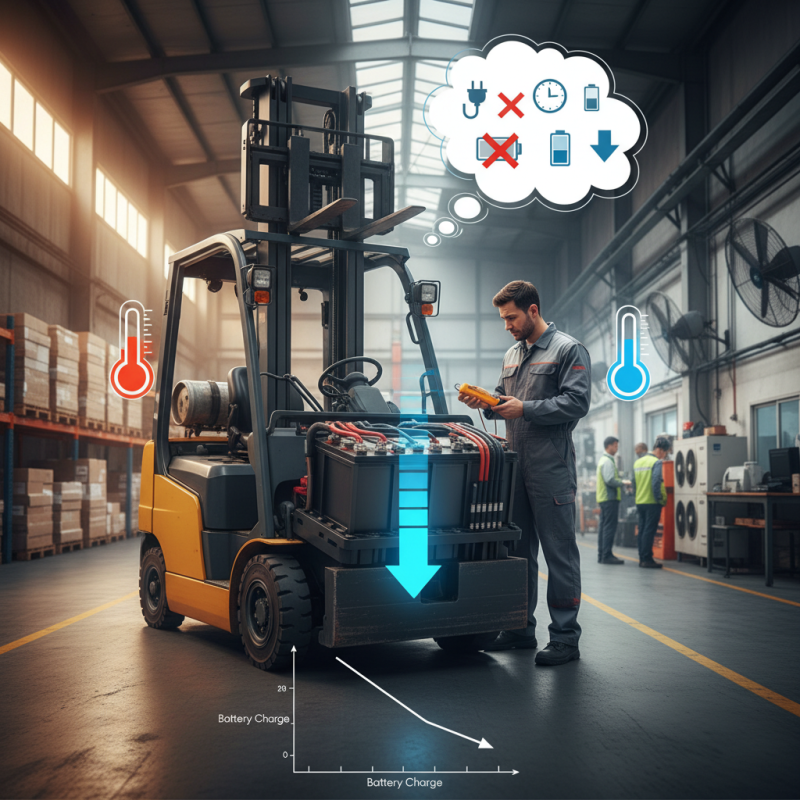
Electric forklift batteries play a crucial role in their operation. Understanding their basics can prevent unexpected downtime. A well-maintained battery typically lasts between five and seven years. However, various factors can influence this lifespan, leading to faster drainage.
Temperature extremes can significantly affect battery performance. High heat can accelerate fluid evaporation, while cold can reduce capacity. Regularly check battery fluid levels. Low electrolyte levels can lead to faster deterioration.
Tips: Always clean battery terminals. Dirt and corrosion can impede performance. Consider investing in a quality charger suited for your battery type. This can enhance efficiency and lifespan.
Another important detail is the charging routine. Avoid letting the battery drop below 20%. Frequent deep discharges may damage the battery's internal structure. Ensure optimal conditions to reduce any potential risks.
| Factors Affecting Battery Life | Description | Expected Lifespan Impact |
|---|---|---|
| Overcharging | Charging the battery beyond its capacity can damage cells and reduce lifespan. | Up to 30% reduction in lifespan. |
| Temperature Extremes | Operating in very high or low temperatures can affect battery performance. | Can shorten lifespan by 15-20%. |
| Inadequate Maintenance | Regular checks and proper maintenance are crucial for longevity. | Lifespan can drop by 10-25% without maintenance. |
| Usage Patterns | Frequent heavy loads and long operational hours can strain the battery. | May diminish lifespan by up to 20%. |
| Battery Age | Older batteries naturally lose capacity over time. | Expected decline in efficiency by 5-10% per year. |
: A well-maintained battery usually lasts between five and seven years.
High heat can cause fluid evaporation, while cold temperatures may reduce battery capacity.
Low electrolyte levels can lead to faster battery deterioration and decreased functionality.
Regularly clean battery terminals and use a suitable charger for enhanced performance.
Avoid letting the battery drop below 20% to prevent damage to its internal structure.
High humidity can cause corrosion and negatively impact battery connections.
Uneven surfaces can lead to faster battery drain due to vibration, affecting overall performance.
A clean, dry space helps prevent dirt accumulation, which can damage electrical contacts.
Overlooked maintenance can often reveal deeper problems affecting performance and lifespan.
Monitoring temperature and condition can provide insights into potential issues, impacting longevity.
In addressing the question, "Why is my electric forklift battery losing charge quickly?", it's essential to understand the fundamental aspects of electric forklift batteries, including their lifespan expectations. Various factors can influence battery drain rates, such as the operational demands placed on the forklift and the age of the battery itself.
Environmental conditions also play a significant role in battery performance, with temperature fluctuations potentially impacting efficiency. Regular maintenance and care are crucial for enhancing battery longevity, ensuring optimal charging practices, and preventing premature wear. Additionally, leveraging advanced technology can provide insights into battery health, allowing operators to monitor performance and manage the power supply effectively. By exploring these elements, operators can better identify and address the reasons for rapid battery depletion in their electric forklifts.

 Neto Forklifts