Why should I switch from diesel to electric forklifts? The question deserves more than a simple sustainability claim. It affects fuel spending, indoor air quality, operator comfort, maintenance planning, and daily productivity. The U.S. Department of Energy’s Alternative Fuels Data Center classifies electric forklifts as zero-tailpipe-emission vehicles. That matters in enclosed warehouses, where diesel exhaust can linger near loading bays, racking, and pedestrian routes. OSHA’s powered-industrial-truck guidance also stresses ventilation when internal-combustion equipment operates indoors.
The financial case can be practical. Electric forklifts avoid diesel purchases, engine oil changes, exhaust-system repairs, and many routine mechanical tasks. The Industrial Truck Association reports that electric trucks represent a major share of the North American forklift market, reflecting broad commercial adoption. Meanwhile, the International Energy Agency continues to document falling battery costs and accelerating industrial electrification. Still, electricity prices, charging infrastructure, battery replacement, and shift length can change the calculation. A rushed conversion may create downtime instead of savings.
Brett Wood, a material-handling industry specialist and president of MHEDA, has emphasized a useful principle: “The right truck is the one that fits the application.” That sentence is easy to overlook. It should not be. Electric forklifts can deliver quieter operation, cleaner indoor air, and predictable energy costs, but they are not automatically ideal for every yard, cold store, or multi-shift operation. This guide examines seven evidence-based reasons to switch from diesel to electric forklifts, while acknowledging the uncomfortable details: charging space is needed, batteries require discipline, and productivity claims must be tested against real operating hours.
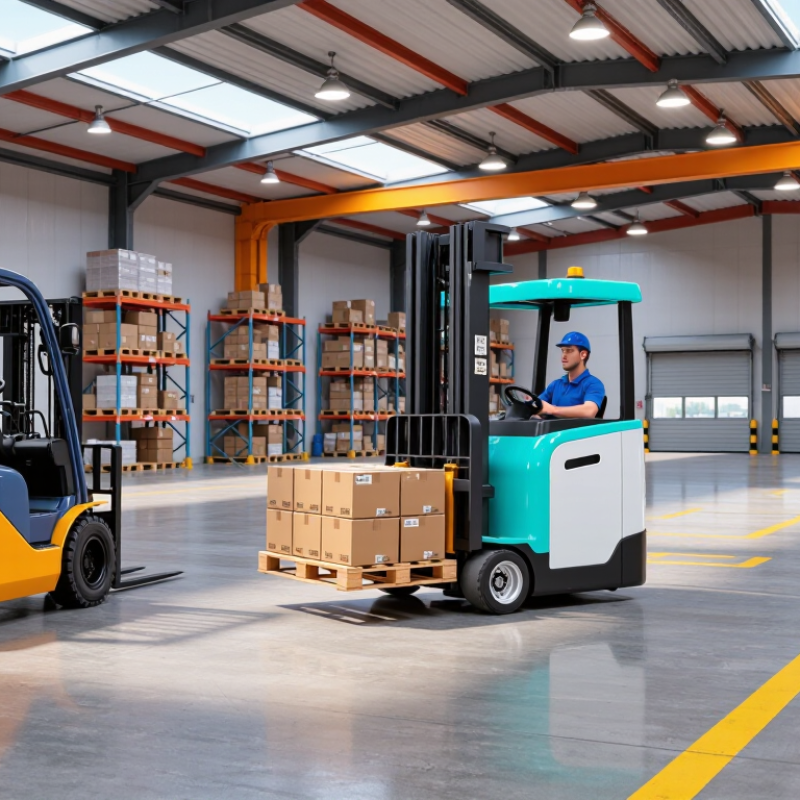
Switching from diesel to electric forklifts can sharply reduce energy spending, especially in warehouses with predictable daily shifts. In one practical cost review, electricity reduced operating energy costs by roughly 50–70% compared with diesel. The result depends on local fuel prices, electricity tariffs, load weight, and annual operating hours. A forklift moving pallets for eight hours daily will show savings faster than a lightly used machine.
The calculation should use real invoices, not advertising estimates. Record monthly diesel consumption, charging electricity, idle time, and maintenance visits. Then compare energy cost per operating hour. Electric models convert more stored energy into movement, while diesel engines lose substantial energy as heat. They also avoid fuel storage, exhaust extraction, and many engine-related service tasks. The workplace feels quieter too. That matters near packing stations.
The benchmark is not perfect. Charging losses, battery replacement, peak-demand fees, and extra batteries can reduce the expected benefit. We once underestimated charging during high-tariff periods, which weakened the projected savings. A site survey should examine shift patterns, charger location, ventilation, and available electrical capacity. A short pilot can reveal hidden costs before a full fleet change. Measure actual kilowatt-hours per shift, not just the meter on the charger. Small details often decide whether the saving reaches 50%, 70%, or much less.
Switching from diesel to electric forklifts can reduce maintenance work, especially around the drive system. Diesel models need engine oil, fuel filters, coolant, belts, exhaust components, and regular combustion-system checks. Electric drives use fewer service parts and fluids. Technicians usually spend less time draining oil or replacing filters. That can shorten scheduled service visits and reduce fluid storage near the warehouse floor.
However, electric forklifts are not maintenance-free. Battery condition, charging cables, connectors, brakes, tires, hydraulics, and safety systems still require inspection. Battery replacement can also be expensive if charging practices are poor. In field maintenance, small issues often become costly when operators ignore warning lights or continue using damaged cables. The comparison is not perfectly simple. Duty cycle matters.
Tips: Track service hours, battery charging patterns, fluid use, and unexpected repairs for three months. Compare real records, not estimates. Keep charging areas clean and dry, and train operators to report unusual heat, odors, or slower lifting. A qualified technician should inspect high-voltage components according to local safety requirements. Electric forklifts may lower routine maintenance, but careless charging can erase part of that advantage. Regular tire checks still matter. So do brake tests.
Diesel forklifts can leave more than noise behind. Their exhaust may add nitrogen oxides, carbon monoxide, and fine particles to indoor air. Electric forklifts produce zero tailpipe emissions indoors, helping warehouses protect workers near loading bays, racks, and packing stations. Cleaner air is especially valuable in buildings with limited ventilation.
From practical site checks, the difference can be noticeable. Diesel fumes often linger around closed doors during winter shifts. Electric equipment removes that exhaust source, but it does not solve every air-quality problem. Tire dust, brake particles, damaged batteries, and poor ventilation still require attention. Electric models also need reliable charging space, trained operators, and planned battery maintenance. That part is easy to underestimate.
Tips: Measure before changing equipment. Use carbon monoxide and particulate monitors at operator height. Compare readings during similar shifts. Keep charging areas ventilated and inspect batteries regularly. Clean floors often, because dust can remain airborne after forklift traffic. Ask operators about headaches, odors, and visibility near busy aisles. Their experience can reveal problems that sensors miss. Avoid assuming a quiet machine is automatically safer. Noise may fall, while traffic awareness needs improvement. Small details matter.
| # | Reason to Switch | Diesel Forklift | Electric Forklift | Practical Workplace Benefit |
|---|---|---|---|---|
| 1 | Zero tailpipe emissions indoors | Produces exhaust pollutants, including carbon monoxide and nitrogen oxides, whenever the engine is operating. | Produces no tailpipe exhaust during indoor operation because it has no combustion engine. | Supports cleaner indoor air and reduces the need to manage engine exhaust, while ventilation remains necessary for battery charging and other workplace hazards. |
| 2 | Lower workplace noise | Engine, cooling, and exhaust systems create continuous mechanical noise during operation. | Electric motors are generally quieter at low and moderate travel speeds, although tires, hydraulics, alarms, and the load still generate sound. | Improves operator communication and can make indoor work areas more comfortable; a workplace noise assessment is still recommended. |
| 3 | Higher energy efficiency | Combustion engines lose substantial energy as heat and through exhaust. | Electric drive systems convert a larger share of input energy into useful movement and can recover energy during regenerative braking. | Can reduce energy waste and operating energy costs, with actual savings depending on electricity and fuel prices, duty cycle, and charging efficiency. |
| 4 | Fewer routine engine-maintenance tasks | Requires engine oil, oil filters, fuel-system service, exhaust-system inspections, and other combustion-related maintenance. | Eliminates engine oil and exhaust-system service, but still requires inspections of brakes, tires, hydraulics, steering, mast components, and the battery system. | May reduce service complexity and maintenance downtime; battery replacement and charging-system maintenance must be included in lifecycle planning. |
| 5 | Lower direct greenhouse-gas emissions at the worksite | Burns diesel fuel on site and directly emits carbon dioxide during operation. | Has no direct exhaust emissions during use. Total lifecycle emissions depend on electricity generation, battery production, and recycling. | Helps reduce on-site combustion emissions and can provide greater climate benefits when charged with lower-carbon electricity. |
| 6 | Regenerative braking and controlled performance | Braking energy is primarily dissipated as heat through mechanical braking systems. | Many electric systems can recover part of the vehicle’s kinetic energy during deceleration and return it to the battery. | Can reduce brake wear and improve controllability, especially in stop-and-go warehouse applications. |
| 7 | Better suitability for enclosed facilities | Needs suitable ventilation and exhaust-control practices when used indoors; operating restrictions may apply in poorly ventilated areas. | Is well suited to many warehouses, food-handling areas, retail facilities, and other enclosed spaces because it has no combustion exhaust. | Supports cleaner operations and may reduce ventilation-related operating requirements, subject to local safety rules and battery-charging controls. |
OSHA reports about 85 forklift-related deaths annually, with many incidents involving tip-overs, falls, or struck workers. That figure makes every warehouse decision feel more serious. Switching from diesel to electric forklifts can reduce several daily hazards. Electric models produce no exhaust fumes indoors. They also create less engine noise, helping operators hear alarms, instructions, and nearby foot traffic.
Electric forklifts usually offer smoother acceleration and more precise control. These features can reduce sudden movements around shelving, loading docks, and narrow aisles. Lower noise may also reduce fatigue during long shifts.
Better visibility matters too. Without diesel smoke, workers can see warning lights, floor markings, and pedestrians more clearly. Maintenance areas may become cleaner because there is no fuel handling or engine oil storage.
Still, electric equipment is not automatically safer. Poor charging practices, weak pedestrian rules, and rushed operators can create different risks. Battery charging needs ventilation, inspections, and trained supervision. That part is sometimes underestimated. Managers should review incident records, aisle layouts, training quality, and charging locations before changing fleets. A quieter forklift can prevent one warning from being heard, not improve safety. Regular horn checks and visible signaling remain essential. The strongest decision combines cleaner operation with disciplined procedures, realistic training, and honest review of near misses. Some facilities may discover that their real problem is not the fuel type, but production pressure.
Lithium-ion batteries can recharge in about one to two hours, depending on capacity, charger output, and temperature. This shorter charging window can protect productivity during busy warehouse shifts. An operator may plug in during lunch, a scheduled break, or a quieter loading period. The forklift can return to work without waiting overnight. That matters when every loading bay has pallets moving constantly.
The calculation is not always neat. A two-hour charge can still fail if the battery is oversized or the charging area is poorly planned. Managers should compare daily operating hours, travel distances, load weights, and available power. Lithium-ion systems also avoid routine battery watering and reduce battery-change handling. However, trained staff must follow charging procedures and inspect cables, connectors, and warning indicators. Reliable results come from matching the battery system to the actual duty cycle, not from trusting a simple promise.
Tips: Record charging times for one week before changing equipment. Mark a visible charging zone near the work area. Keep spare capacity for unexpected overtime. Check battery temperature after intensive use. A small pilot test may reveal missed delays. Review the data honestly.
They produce zero tailpipe emissions indoors. This can reduce exhaust near loading bays, racks, and packing stations. Cleaner air helps most where ventilation is limited. But dust remains.
No. Tire dust, brake particles, damaged batteries, and poor ventilation still need attention. Clean floors regularly. Air problems can remain after traffic stops.
Use carbon monoxide and particulate monitors at operator height. Compare similar shifts and locations. Ask workers about odors, headaches, and poor visibility. Sensors miss some details.
No. Charging mistakes, weak pedestrian rules, and rushed driving can create new risks. Review near misses, aisle layouts, and training quality. The fuel type is only one factor.
Quieter operation may help workers hear instructions, alarms, and foot traffic. However, one warning may become harder to notice. Check horns and use visible signals. Quiet is not automatically safe.
Many can recharge in about one to two hours. Charging time depends on battery size, charger output, and temperature. A two-hour charge may still fail during overtime.
Compare operating hours, travel distances, load weights, and available power. Inspect cables, connectors, and warning indicators. Keep charging areas ventilated. Plan spare capacity.
Record charging times for one week. Mark a visible charging zone near active work areas. Check battery temperature after heavy use. Review delays honestly. The result may disappoint.
Switching from diesel to electric forklifts can lower operating costs while creating a cleaner, quieter, and more efficient workplace. Electric models may reduce energy spending by 50–70%, depending on usage, electricity rates, and charging practices. They also require fewer service parts, fluids, and routine maintenance because electric drives have fewer moving components than diesel systems. With zero tailpipe emissions indoors, they can help improve air quality and reduce ventilation demands in enclosed facilities.
Why should I switch from diesel to electric forklifts? Safety, productivity, and long-term efficiency are strong reasons. Lower noise levels can improve communication and reduce workplace disruption, while reducing forklift-related risks remains essential given the serious injuries and fatalities associated with material-handling equipment. Lithium-ion batteries can often recharge in approximately one to two hours, helping support multiple shifts with less downtime. Together, these advantages make electric forklifts a practical choice for businesses seeking lower costs, cleaner operations, and more predictable performance.

Neto Forklifts